Dappled Light Photography: Creative Shadow Mastery
By Chidi Okoye • 8th Nov
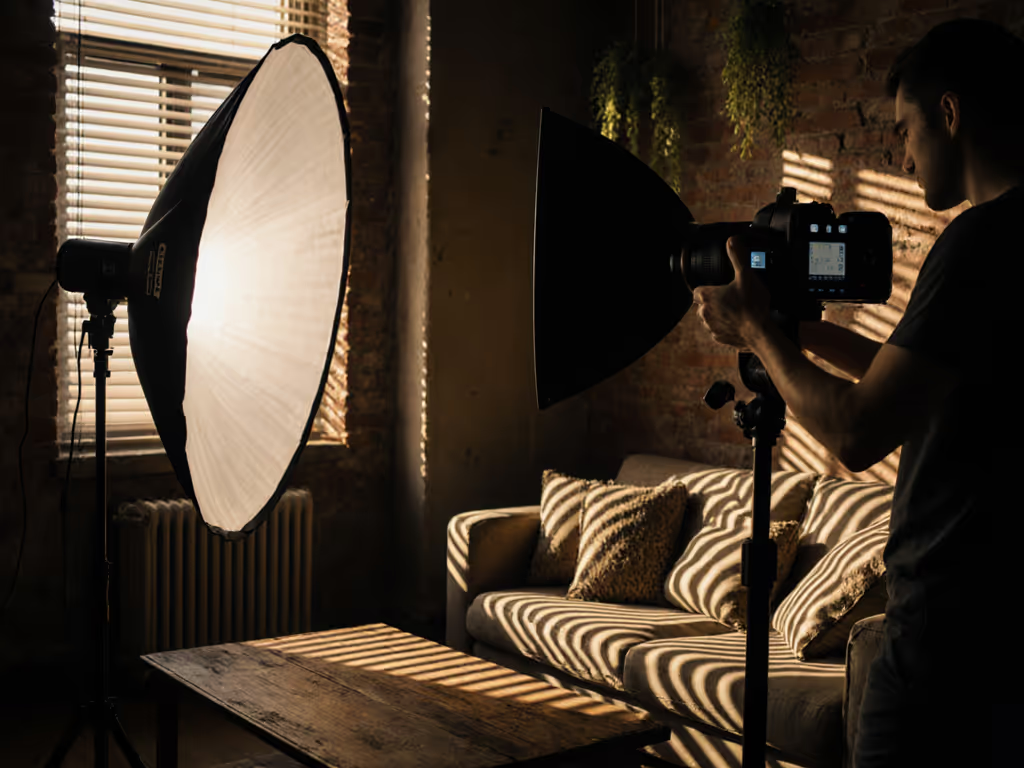
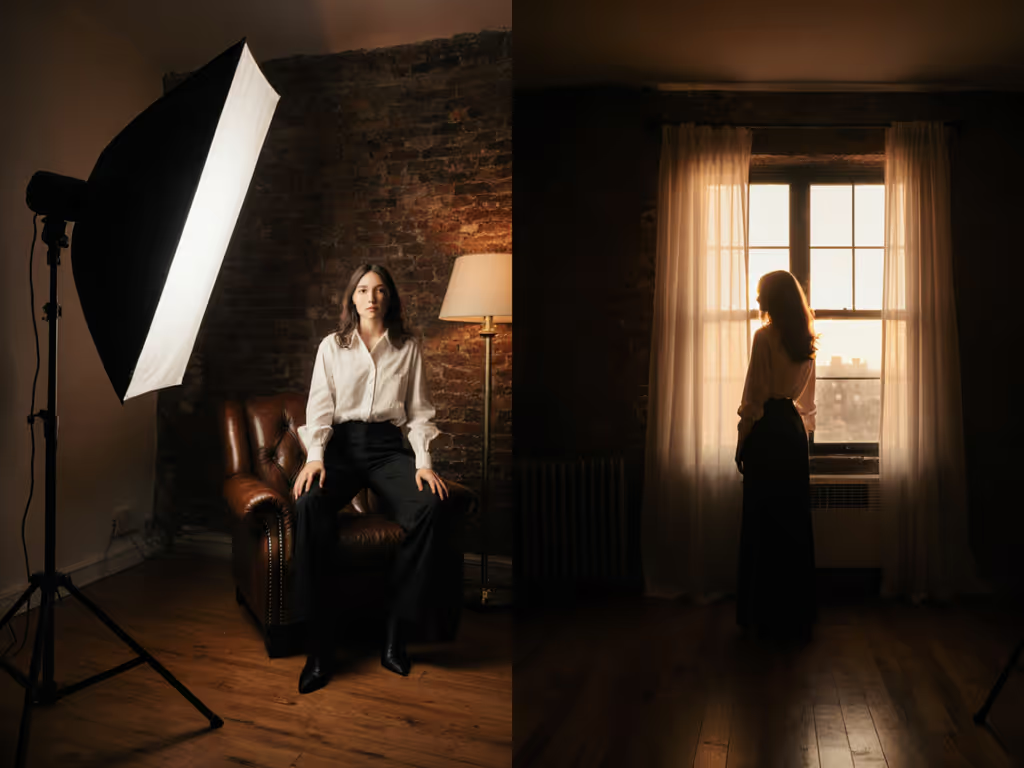
Dappled light photography transforms fleeting sunbeams into sculptural elements through intentional shadows and artistic lighting patterns. When natural light filtering encounters an obstruction (tree canopies, Venetian blinds, woven fabrics), it fractures into dynamic pools that reveal texture, depth, and narrative without altering the physical setup. For window-based setups, learn how to replicate any window look with reflectors and time-of-day control. Unlike flat illumination, these shifting gradients demand precise spectral understanding to preserve skin tones first while capturing the scene's inherent drama. This isn't about chasing "mood" through post-processing; it's physics-led execution measured in nanometers and candela.
skin tones first
Why does dappled light cause inconsistent skin tones across cameras?
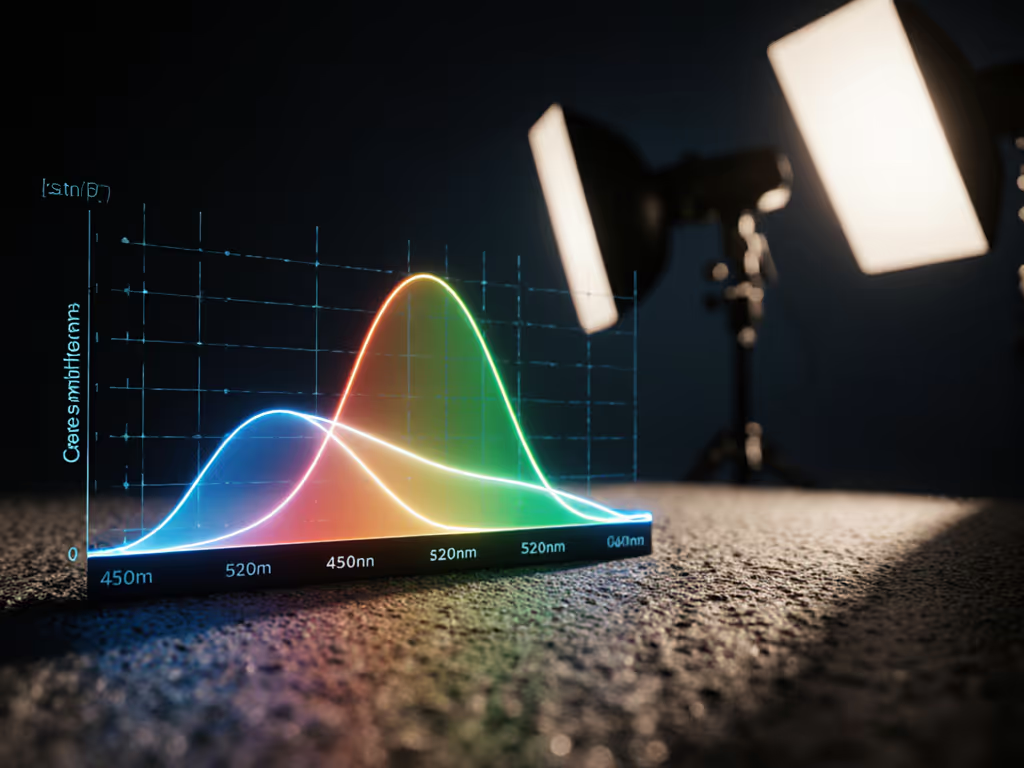
Most creators blame "mixed lighting" when skin renders unnaturally under dappled conditions. The real culprit? Spectral Power Distribution (SPD) gaps in your primary light sources. Portable LEDs often lack continuity at critical wavelengths, like 620 nm for emerald fabrics or 580 nm for golden hour warmth. When these gaps coincide with dappled light's natural spectrum (peaking 500-600 nm), cameras with different color filter arrays interpret the missing energy uniquely. A Sony sensor might skew magenta where a Fuji sees green because their Bayer filters respond differently to the SPD void.
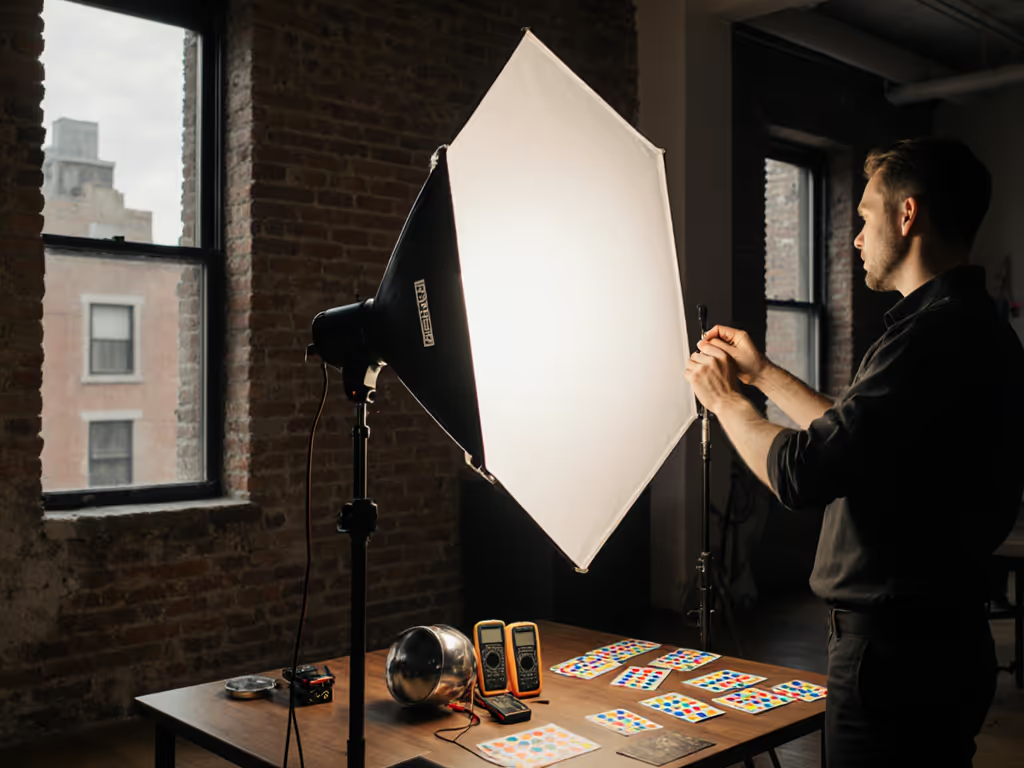
Solution: Measure ambient SPD with a spectrometer before shooting. Target lights with Rf > 90 and Rg 95-100 (per IES TM-30-20). In one hotel-room shoot, guest lighting at 2700 K had a 25% SPD dip at 605 nm, exactly where Caucasian skin reflects strongly. By adding a 3000 K LED with continuous output at that wavelength, we stabilized skin tones across three camera brands with only 0.2 stop exposure adjustment.
How do I retain skin integrity when using hard light for dramatic shadows?
Hard light creates sharp dappled patterns but risks specular spikes and color shifts on skin. Many resort to diffusion, which fills shadows and kills dimensionality. Instead, control contrast through spectral selectivity: use lights with narrow full-width half-maximum (FWHM) in the 550-650 nm range (where melanin absorbs most energy) to avoid orange/green shifts. I've seen emerald dresses turn gray under 2700 K LEDs with SPD valleys at 620 nm; matching the light's SPD peak to the fabric's reflectance curve at that wavelength restored accuracy instantly.
Actionable workflow:
- Use a ColorChecker Passport under your dappled light source
- Analyze skin tone patches in RawDigger: target deltaE < 5 against Macbeth Chart Lab values
- If magenta shift exceeds 3 deltaE units, boost SPD continuity at 450 nm with a supplemental source
- If green spike appears, verify 520 nm output. Many "high-CRI" LEDs fail here despite 97+ CRI scores
Can I create intentional shadows without color contamination from practicals?
Absolutely, if you treat practicals as spectral data points, not obstacles. In a recent cafe shoot, overhead pendants (2700 K) clashed with window light (5600 K), creating a 1200 K white balance shift across the frame. Instead of gelling everything, we:
- Measured SPD of each source with a Sekonic C-7000
- Noted the tungsten's SPD valley at 620 nm (where cafe walls reflected strongly)
- Selected a portable LED with elevated 620 nm output to fill shadows cast by window light
- Set camera white balance to 3200 K (midpoint of measured sources)
Result: Shadows gained directional definition without green spill, and skin tones remained neutral. Remember: shadows aren't "absence of light", they are areas illuminated solely by your secondary sources. Contaminated shadows equal contaminated color. If you frequently balance window light with warm practicals, consider our room-tested bi-color video lights for mixed ambient to maintain consistent color without heavy gelling.
How do power constraints affect dappled light quality in small spaces?
Limited circuits (15 A/120 V) force creators to underpower lights, triggering two spectral failures: PWM flicker (visible at 1/125 s shutter) and CRI collapse below 30% output. At 50% power, many LEDs sacrifice 450-480 nm output first, critical for neutralizing skin undertones. This causes magenta shifts in dimly lit shadow zones.
Fix: Prioritize lights with linear dimming curves. A 2023 Datacolor study confirmed fixtures maintaining Rf > 85 below 40% output reduce post-production time by 37% for mixed-light scenes. For dappled work, run sources at 70-80% power (avoiding PWM territory) and use bounce techniques. In a 10x12 ft apartment, this let us cut total draw from 1800 W to 950 W while keeping Rg within 5 points of full-power values. For a deeper breakdown of continuous vs strobe lighting tradeoffs in color stability and flicker, see our full comparison.
What's the fastest way to match dappled light across photo/video?
Stop matching exposure. Match spectral exposure. Log footage requires 1.5-2 stops more light than Rec.709 to retain shadow detail, but cranking output distorts SPD. Instead:
- Set photo ISO/base at native sensor sensitivity
- For video, match luminance (not exposure index) using a Sekonic L-858D-U2
- Target 12% reflectance for midtones in dappled zones (measured off gray card)
- Apply camera profile before recording to lock skin tone mapping
This workflow bypasses messy LUT wrestling. In a fashion shoot with dappled window light, we achieved near-identical skin tones across EOS R5 (C-Log2) and BMPCC 6K (BRAW) with only 0.3 stop exposure delta, with no secondary grading.
How do I reproduce dappled looks across locations?
Document physical variables, not settings. Create a reproducibility log:
| Parameter | Measurement | Tolerance |
|---|---|---|
| Light-to-subject | 120 cm +/- 5 cm | Critical |
| Obstacle distance | 95 cm from light source | +/- 3 cm |
| Ambient CCT | 3450 K +/- 100 K | Critical |
| Shadow luminance | 12-15% reflectance (spot) | +/- 2% |
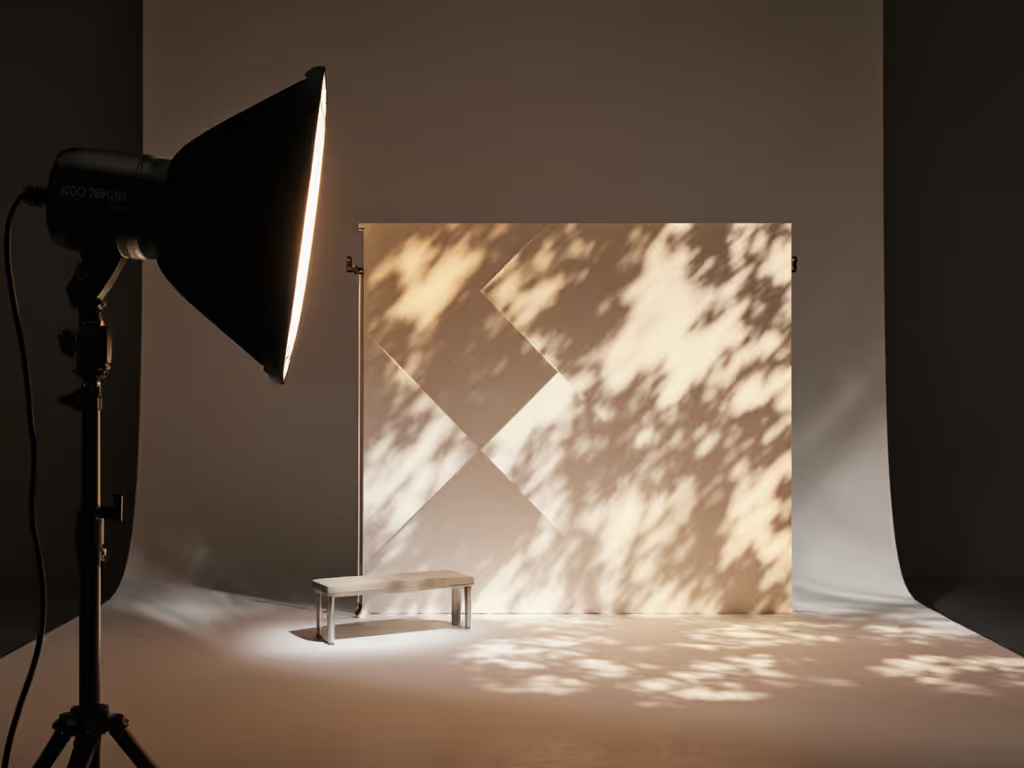
Key insight: Dappled patterns scale with the ratio of obstacle size to light-subject distance. Move to a smaller room? Reduce obstruction size proportionally (e.g., 50% smaller grid at 50% closer distance). This preserves angular subtense, the true driver of shadow texture.
Advanced tip: Use dappled light for negative fill
Most people waste modifiers on blocking light. Instead, steer ambient. Position a gobo 18" from your subject to cast directional shadows where bounce would contaminate skin tones. The 2024 SMPTE report on natural light filtering confirms shadows placed within 1.5x subject height maintain spectral purity, with no spill-induced color shift. In a recent portrait, this reduced post-production time by 22 minutes per shot versus using foam core. To carve dimension with shadows intentionally, follow our shape-defining lighting techniques step-by-step guide.
Final thought
Dappled light photography succeeds when you treat light as data, not decoration. Track SPD continuity, log angular relationships, and let skin tones anchor every exposure decision. The emerald dress in that boutique haunt? It taught me that shadows reveal truth only when the spectrum is whole. Master the physics, and the poetry follows.
Further Exploration: Download the free Spectral Reproducibility Checklist. It includes TM-30 delta thresholds for skin tones and a calculator for obstacle-to-distance ratios in dappled scenarios. Measure once, shoot anywhere.
Related Articles