Classic Lighting Techniques: How Photographers Solved Problems Without Modern Tech
By Chidi Okoye • 2nd Nov
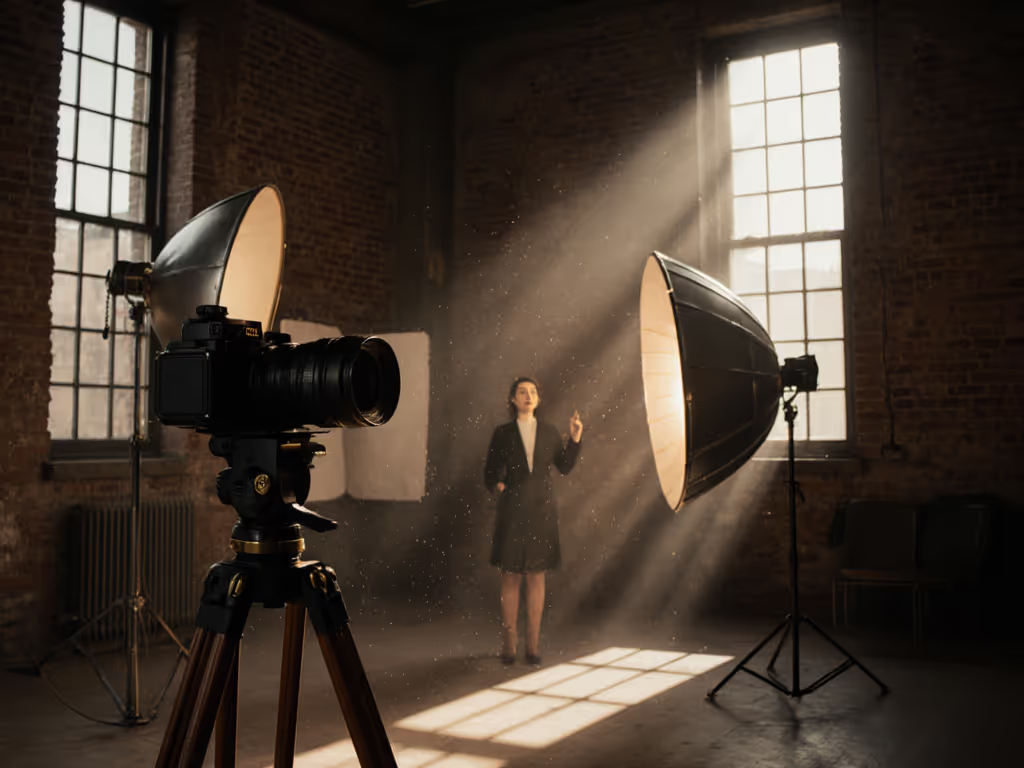
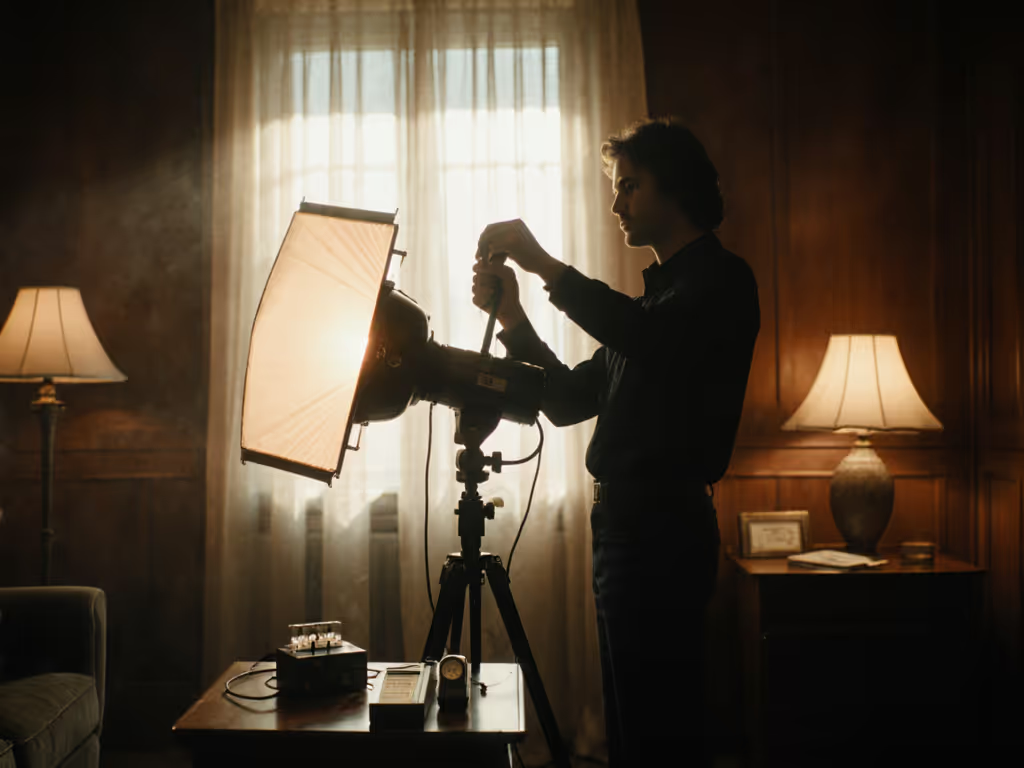
Classic lighting techniques represent a foundational toolkit that photographers historically leveraged to overcome technical constraints, producing dimensional imagery without modern digital aids. These approaches solved core problems of dimensionality, spill control, and color consistency through deliberate light placement and modifiers. As hybrid creators navigate mixed lighting and space limitations today, these vintage methods offer tested solutions requiring minimal gear. Below, we dissect key techniques and their problem-solving applications through an evidence-led lens. Skin tones first; everything else negotiates around them. Profiles are tools, not crutches. We will define terms before use, avoiding speculative claims. This analysis bridges historical practice to contemporary constraints in real-room scenarios.
What defines Rembrandt lighting and how did it solve dimensionality challenges?
Rembrandt lighting creates a triangular highlight on the shadow-side cheekbone using a single elevated source angled at 45 degrees [1][3]. This technique emerged from Renaissance painters like Titian and Bellini to simulate three-dimensionality on flat surfaces [1]. The method resolves volumetric ambiguity through controlled ratios:
- Highlights define contour edges
- Midtones transition surface planes
- Core shadows establish facial structure depth
- Reflected fill (often from boards) softens falloff Photographers adopted this approach to create sculptural dimensionality without multi-light setups, crucial for location work where space prohibited complex rigs [1][6]. A Venetian artist's solution to Gothic portraiture's flatness became a portable dimensional toolkit.
How did early artificial light sources constrain and drive creative problem-solving?
Pre-electric lighting demanded hazardous workarounds:
- Limelight (1839): Calcium carbonate heated by oxygen flame produced inconsistent, chalky images requiring long exposures [2]
- Magnesium wire (1870s): Minute-long burns risked uneven illumination and fires [2]
- Flash powder: Magnesium-gunpowder mixes caused studio fires but enabled action freezing [2] These limitations forced spatial precision, as photographers positioned subjects closer to windows or modified reflectors to maximize scarce light. Darkroom printing then standardized results, with materials like Ilford Multigrade IV RC Deluxe paper providing predictable tonal reproduction [5].
What core lighting patterns emerged as universal solutions?
| Technique | Shadow Signature | Problem Solved |
|---|---|---|
| Butterfly | Symmetrical nose shadow downward | Flatness under front-lit news setups [1][9] |
| Loop | Small nasal crescent at 30-45° | Gentle facial modeling in tight spaces [8][9] |
| Split | Half-face division | Dramatic reduction of spill in mixed light [8] |
| Rim | Backlit subject outline | Separation from busy backgrounds [6] |
| These patterns became shorthand for controlling depth perception and focus direction when complex metering was not feasible. Filmmakers later expanded them, and three-point lighting systematized fill ratios, while gobos in film noir projected patterned shadows to imply environmental context without physical builds [3]. For practical control over spill and shape, see our guide to essential light modifiers. |
How did vintage methods address modern hybrid creators' pain points?
Classic approaches solve recurring constraints:
- Skin tone fidelity: Rembrandt's chiaroscuro avoids flat LED rendering by articulating subcutaneous structure through shadow gradation [1][7]
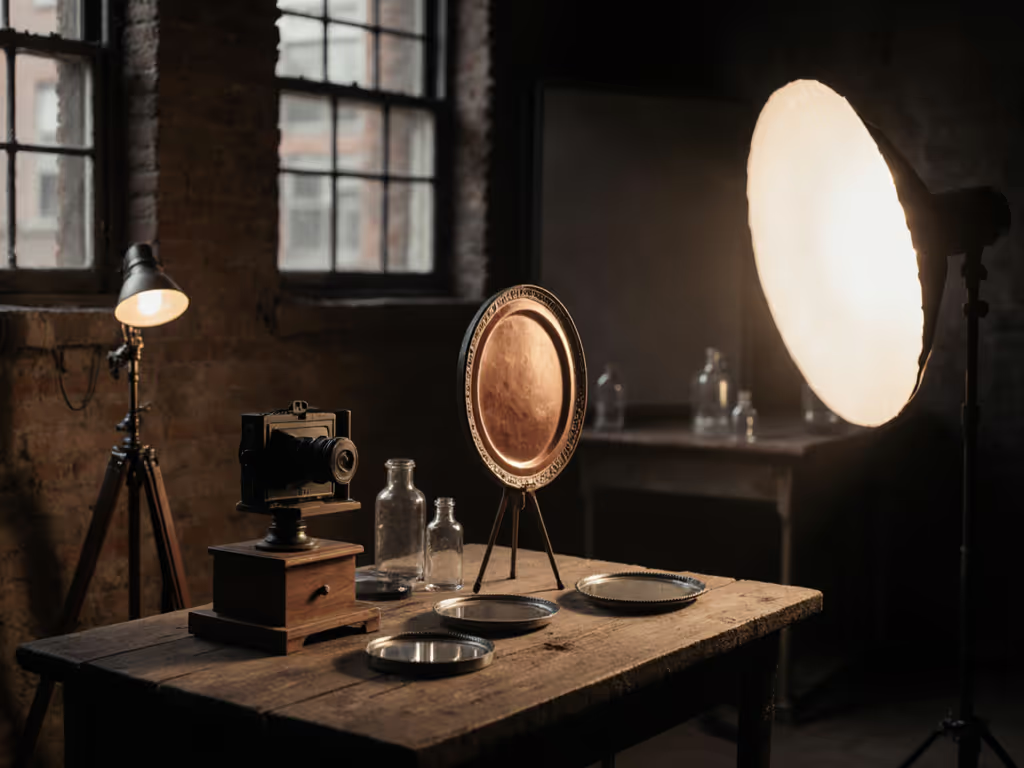
- Spill control: Barn doors and flags (historical equivalents: black cloth) contained light before grids existed, solving small-space contamination [3]
- Power management: Single-source techniques like split lighting minimized fixture counts, preventing circuit overloads [8]
- Visual consistency: Repeating exact light-subject distances created reproducible looks across locations, and a notebook sufficed where digital presets did not exist [1]
"The giveaway for Rembrandt lighting is that, on the dark side of the face, there is a triangle of light under the eye." [1] This geometric marker enabled reliable recreation without spectral meters.
Can pre-digital techniques resolve mixed lighting conflicts?
Positioning strategies neutralized multi-source contamination:
- Isolate subjects from practicals using gobos (improvised: cardboard)
- Leverage directional spill as fill via reflectors
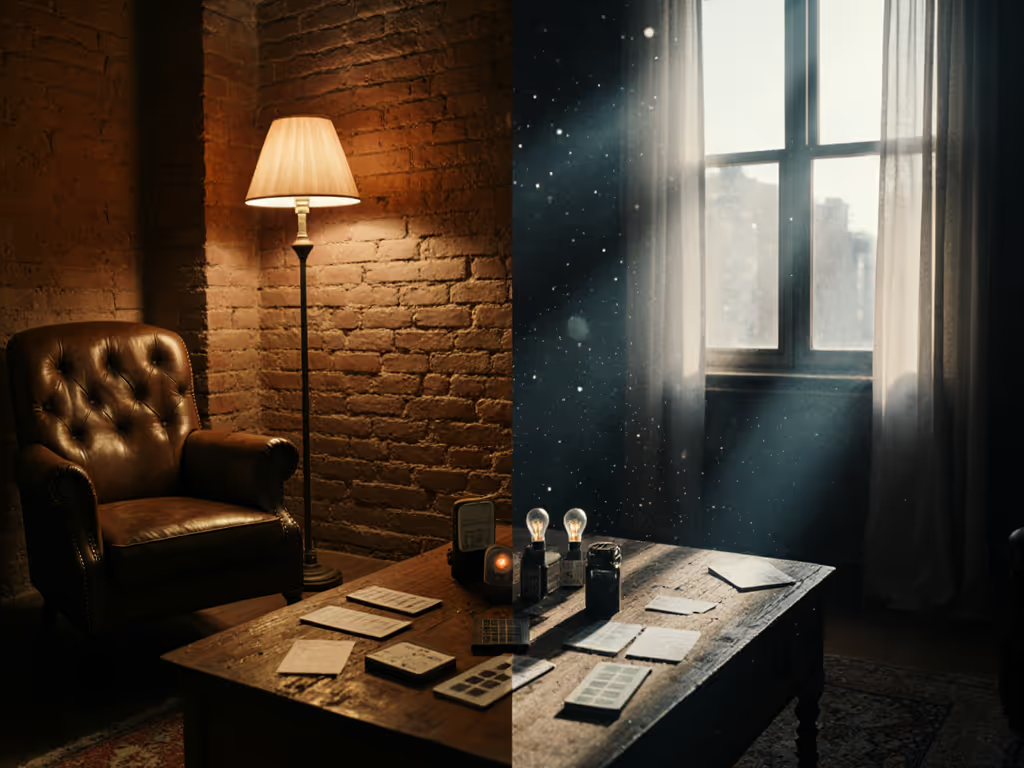
- Embrace tungsten shift for warm separation from window light Film noir cinematographers exploited mixed sources (tungsten key with daylight fill) to create stark contrast that concealed color mismatches [3]. To turn shadows into a deliberate subject rather than a byproduct, explore our creative shadow photography guide. Modern creators can adopt this by designing intentional imbalance rather than fighting it.
Classic lighting techniques remain vital frameworks for dimensional authenticity under technical constraints. Their evolution reveals that solving for skin tones and spill control transcends era-specific tools. Further exploration into Renaissance chiaroscuro or film noir shadow play offers actionable strategies for today's real-room challenges, proof that foundational light design outlives technological shifts.
Related Articles