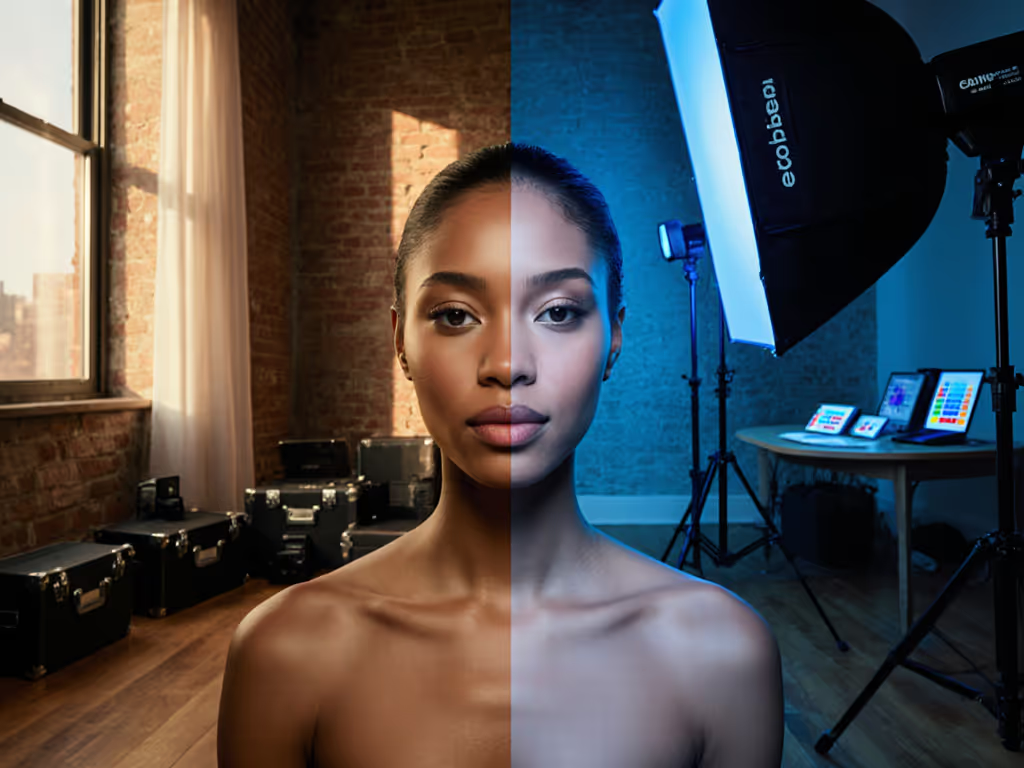
Continuous vs Strobe: Skin-True Fashion Lighting Decoded
By Chidi Okoye • 11th Jan
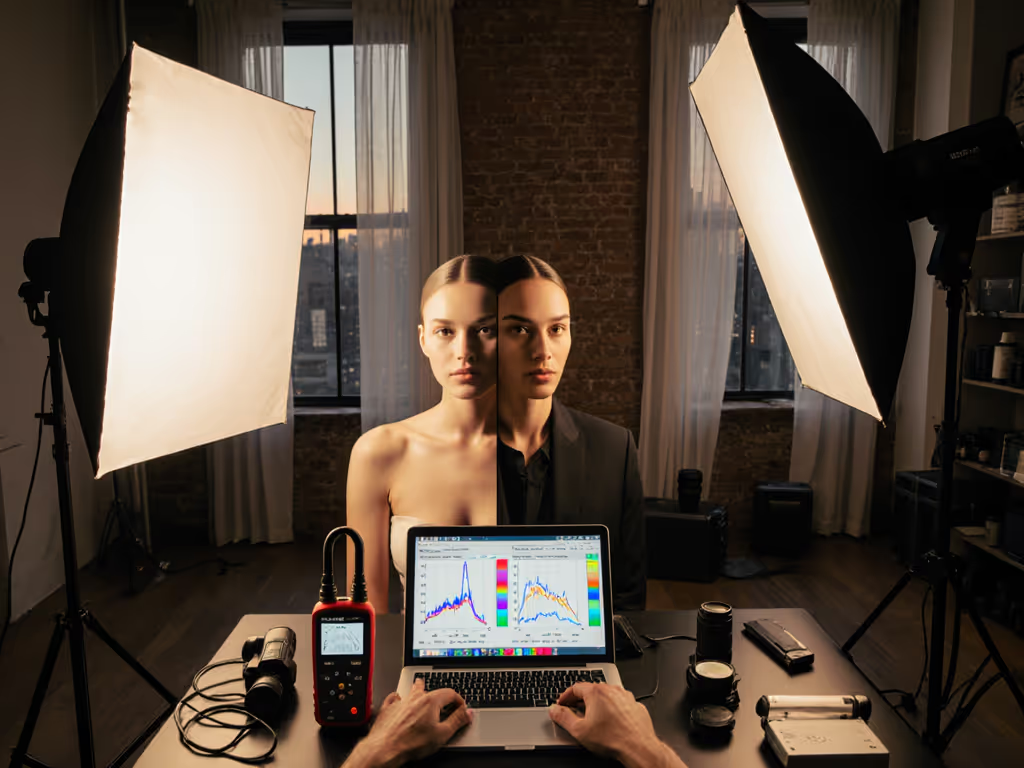
When evaluating continuous vs strobe fashion lighting, the core question isn't power or portability, it's spectral fidelity to human skin. This fashion lighting comparison must center on spectral power distribution (SPD), as flawed SPDs corrupt color rendition regardless of lux or watt-seconds. Skin tones define our north star; everything else negotiates around them. For techniques tailored to inclusive portraiture, see our lighting for diverse skin tones guide. A single spectral gap can transform emerald to mud while leaving skin pallid, a reality I've measured with spectrometers in countless mixed-source environments. Let's dissect how each technology serves the most critical element of fashion imagery: truth to skin.
Understanding Spectral Power Distribution as the Foundation
Defining SPD and Its Non-Negotiable Role
Spectral Power Distribution (SPD) plots light intensity across wavelengths (380-780 nm). Unlike CRI (Color Rendering Index), which oversimplifies color fidelity, TM-30-20 metrics, specifically Rf (fidelity index) and Rg (gamut index), quantify how accurately a source renders saturated colors and skin tones. Rf values below 90 indicate critical SPD flaws, often manifesting as unnatural skin tones even when white balance appears correct. Rg deviations beyond +/- 3% signal oversaturated or muted colors. SPD analysis isn't optional; it's the diagnostic tool that reveals why a "daylight" LED might fail a champagne silk dress while distorting olive skin.
Strobe Lighting: Peak Power vs. Spectral Gaps
Strobes generate light via xenon gas discharge, producing a smooth, full-spectrum SPD resembling daylight (Rf 95-98 in quality units). This inherent spectral continuity minimizes metamerism (where colors match under one light but not another). However, motion capture fashion work exposes key limitations:
- Flash duration: As short as 1/17,500s (e.g., Profoto Pro-11), it freezes motion but requires precise sync speed management. This is ideal for dynamic runway shots, but risks mismatched ambient light if windows or practicals bleed in.
- Modeling lamp pitfalls: Cheap strobe modeling lamps often have spiky SPDs (Rf 75-80). What you see during setup rarely matches the flash SPD. Skin tones may look warm under modeling light, yet render cold when flashed, a critical disconnect in mixed-light studios.
- Power vs. consistency: High-watt-second units (600Ws+) deliver brute force for overpowering daylight, but spectral stability degrades at partial power. Tests show Rf dropping 8-12 points at 1/32 power on budget strobes.
Continuous Lighting: Real-Time Control vs. SPD Variability
Modern lighting studio setups increasingly rely on high-CRI LEDs, but not all continuous lights honor skin tones equally. If you're weighing continuous options, compare LED vs fluorescent studio lighting for true color performance. Their SPDs vary wildly:
- Bi-color LEDs: Adjustable from 2700K-6500K (e.g., Aputure 300d), but SPDs often develop troughs between 580-620 nm at non-native CCTs. This gap turns golden-hour skin tones ashen, a flaw impossible to fix in post.
- RGBWW panels: Offer 16M colors via tunable diodes, yet many sacrifice Rf below 85 when hues shift from daylight. Skin magenta shifts become unavoidable.
- Thermal drift: Continuous operation heats LEDs, causing SPD shifts over time. A 0.5-hour shoot at 100% output can lower Rf by 5-7 points, particularly in warm tones where skin lives.
Unlike strobes, continuous lights enable real-time spill control in tight spaces, crucial for runway lighting techniques where ceilings hover at 8-9 feet. But without SPD validation, WYSIWYG (what you see is what you get) becomes a mirage.
Critical Comparison: Skin Tone Accuracy Under Real Constraints
Motion Handling and Ambient Integration
Skin tones first; everything else negotiates around them.
Strobes excel when freezing motion is non-negotiable (e.g., fabric in motion during runway capes). However, their sync speed limitations (typically 1/200s) can cause ambient light contamination under mixed sources, daylight from windows altering flash color. In small studios, this demands scrupulous blackout or gelling, adding complexity.
Continuous lights simplify ambient integration. At 1/60s shutter speed, they blend seamlessly with daylight or tungsten, avoiding color splits. But slower shutter speeds risk motion blur with moving subjects, making them less ideal for dynamic motion capture fashion unless paired with high-ISO sensors. Crucially, their constant output enables precise spill control via flags in confined spaces, protecting skin tones from green-tinted practicals. For a deeper look at how direction changes skin tone rendering, see lighting angles explained.
Power Efficiency and Thermal Challenges
Real-world constraints define lighting studio viability:
| Factor | Strobes | Continuous LEDs |
|---|---|---|
| Power Draw | High surge during recycle (5-10A) | Steady draw (1.5-3A) |
| Heat Output | Modeling lamp heats set area | Even heat, but fans may hum |
| Breaker Safety | Risk tripping shared 15A circuits | Safer for multi-light setups |
| PWM Flicker Risk | None (instant discharge) | Common below 1/250s shutter speed |
For apartment studios on 15A circuits, continuous lights avoid breaker trips during multi-light shoots. But PWM flicker can ruin video, requiring shutter angles >170°. Strobes eliminate flicker but can drain power during high-volume shoots.
Camera Profiles and Color Consistency
Here, color accuracy fashion photography demands discipline. Strobes require manual white balance via gray card under flash, impossible with mixed ambient. Continuous lights allow live WB tweaks but can suffer from SPD instability during long shoots.
The solution? Profiles are tools, not crutches. Whether using a strobe or continuous source:
- Measure SPD with a spectrometer (e.g., X-Rite i1Pro 3)
- Target Rf >= 90, Rg 98-102 for skin tones
- Build custom camera profiles per light source
In my emerald dress case study, a 620 nm SPD dip in store LEDs corrupted red receptors, rendering skin gray-green. A strobe's smooth SPD would have fixed it, but the client needed video. For hybrid photo/video sets, our best CRI video panels maintain skin accuracy. We swapped to a high-Rf COB LED (Rf 94), set WB at 5600K, and applied a profile. Skin stabilized; emerald returned. No post-production bandaids.
Actionable Framework for Small-Space Studios
Your Skin-First Lighting Protocol
-
SPD Validation First: Rent a spectrometer for critical shoots. Prioritize lights with published TM-30 reports (Rf >90, Rg 98-102). Never trust "95 CRI" claims.
-
Ambient Neutralization: In mixed-light rooms:
- For strobes: Match flash to dominant ambient via gel (e.g., 1/2 CTO for tungsten).
- For continuous: Use bi-color LEDs to dial into ambient CCT before adjusting WB.
- Small-Space Modifier Tactics:
- Grids > Softboxes: Use 20°-30° honeycombs to control spill in 8ft ceilings.
- Negative Fill: Foam core opposite the key light preserves skin dimensionality.
- Distance Ratios: Place continuous lights 1.5x farther than strobes to reduce heat and fan noise.
- Power Management: On 15A circuits:
- Strobes: Limit to 2 units max; use staggered firing.
- Continuous: Max 300W total draw (e.g., two 150W LEDs).
Final Verdict: Match the Light to Skin's Needs, Not the Myth
Choose strobes when:
- Capturing rapid motion (runway walks, fabric movement)
- Overpowering bright daylight (outdoor editorial)
- Using high-end units with stable SPDs across power ranges
Choose continuous when:
- Shooting photo/video hybrid sets
- Battling mixed ambient in tiny studios
- Prioritizing thermal/noise control for long shoots
The boutique emerald dress crisis taught me that spectral honesty trumps output. Neither light wins. For a gear-focused breakdown of continuous vs strobe for product work, see our companion guide. Skin tones define success; SPDs determine if a source delivers. Stop gambling on generic lights. Validate spectra, build profiles per setup, and liberate yourself from color-correction purgatory. Your clients, and their skin, will trust what you deliver.
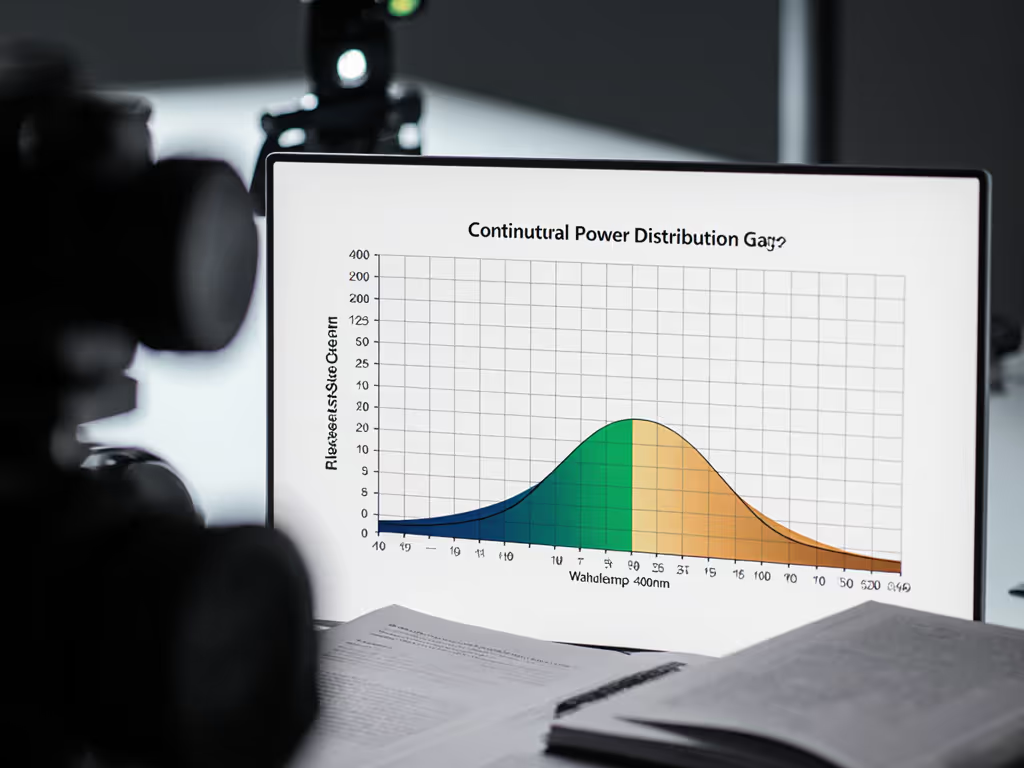
Want deeper SPD diagnostics? Download my free spectral validation checklist, field-tested in 200+ real-world studios, to ensure your lights never distort skin again.
Related Articles