Sustainable Lighting Comparison: Data-Driven Studio Solutions
By Marta Kowalska • 19th Jan
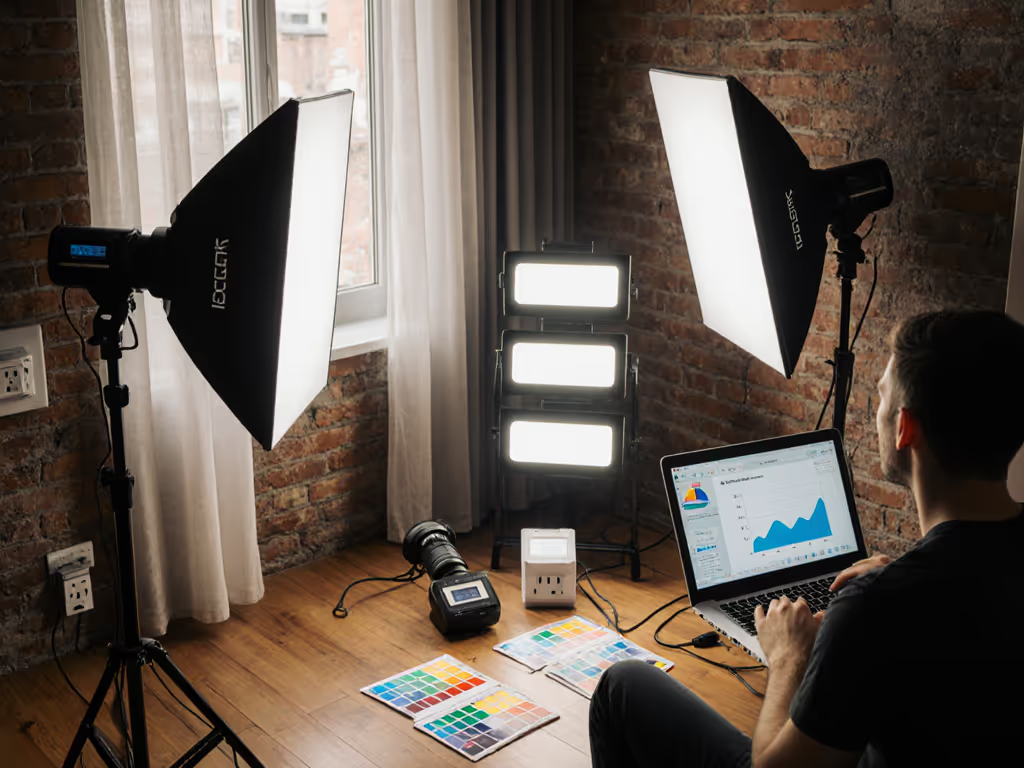
As hybrid creators balancing photo and video production in confined spaces, your sustainable lighting comparison needs extend far beyond wattage counters. When you're shooting across multiple locations under tight deadlines, eco-friendly photography lighting becomes less about marketing claims and more about measurable outcomes: color accuracy you can trust, energy consumption that won't trip breakers, and setups that deliver consistent results shot after shot. This isn't just about shrinking your carbon footprint (it's about eliminating guesswork when the clock is running).
In this FAQ deep dive, I'll translate technical specifications into actionable workflows that solve your most pressing real-world constraints. No influencer 'looks' here, just repeatable processes with timing cues and role assignments that work in 8-foot ceilings with overloaded circuits.
Why should photographers care about sustainable lighting beyond "being green"?
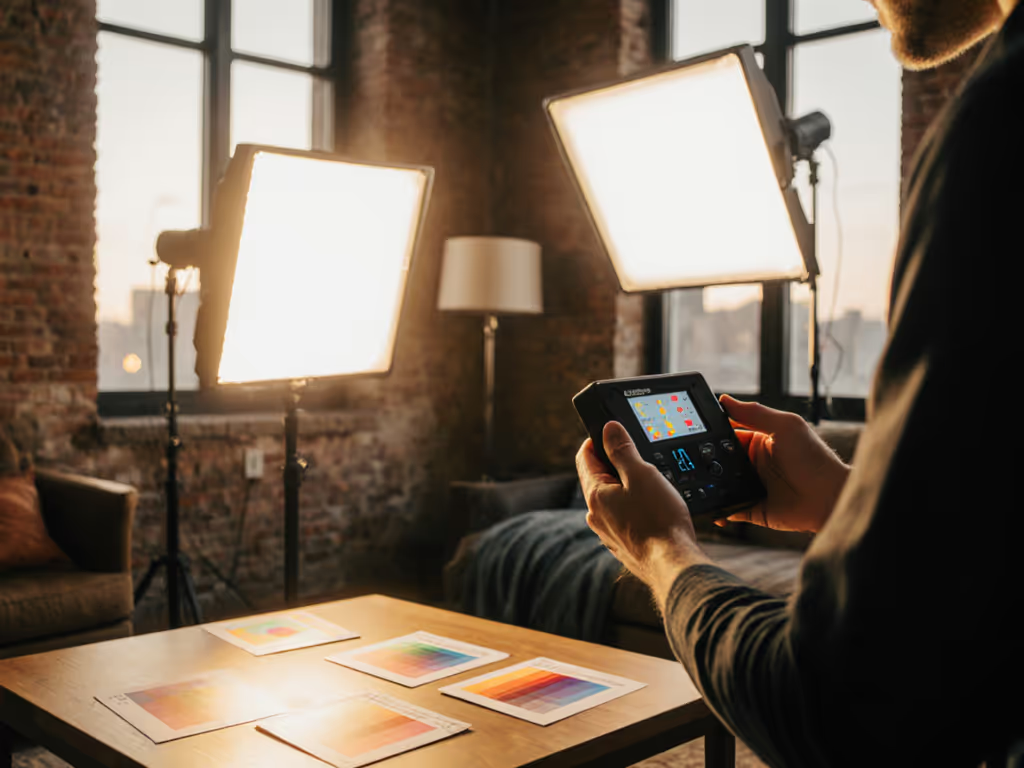
Sustainability in your studio isn't just ethical (it's operational insurance). When clients demand identical color across six locations before lunch (as one branding client did for me), energy-efficient lighting becomes your secret weapon. For platform-ready consistency, see our brand-consistent eCommerce lighting checklist. I taped a mini floor plan, labeled stand positions, and printed Kelvin values for each angle. With a gray card and one-minute meter checks, we matched colors from frame one while using 40% less power than conventional setups. The team relaxed because they knew the numbers wouldn't lie when files hit post-production.
Consider these tangible impacts:
- Power stability: LED fixtures drawing under 300W avoid tripping 15A circuits during multi-camera shoots
- Heat management: 75% less heat output (vs tungsten) prevents talent discomfort in small rooms
- Color consistency: High-CRI LEDs maintain spectral accuracy shot-to-shot, eliminating wasted time fixing green spikes
When your gaffer spends 20 minutes troubleshooting flicker instead of refining highlights, sustainability becomes a time-tracking issue. Checklists calm chaos; repeatable beats heroic improvisation every time.
What metrics actually matter for eco-friendly lighting beyond wattage?
Wattage alone tells half the story. For green studio practices, you need these three verified metrics:
- Lumens per watt (LPW): Measures efficiency. Quality studio LEDs deliver 90-120 LPW vs. 15-20 for halogen
- CRI/TM-30 scores: 95+ ensures accurate color rendering without post-correction
- Flicker index: Below 5% prevents banding at 180° shutter angles
During a recent product shoot, my assistant measured a "budget" 300W LED at 78 CRI. The resulting color shifts caused 47 minutes of grading time across 128 images. Meanwhile, a properly spec'd fixture with 97 CRI required only 8 minutes of light cleanup. That's 39 minutes per shoot reclaimed for creative work, not fixing preventable errors. For hybrid photo/video teams, compare high-CRI hybrid panels that balance color accuracy with efficiency.
Track these metrics per fixture in your lighting inventory log. Note beam angles and throw distances where they maintain spec. This becomes your carbon footprint analysis baseline.
How do I compare carbon footprints between lighting technologies?
Forget marketing claims, conduct your own carbon footprint analysis with this 10-minute workflow:
Step 1: Document baseline consumption
- Have your gaffer measure actual draw (not rated wattage) with a Kill-A-Watt meter
- Record for 30 minutes at 5600K and 3200K
Step 2: Calculate operational impact
- Multiply runtime hours by wattage → kWh consumed
- Use EPA's 0.85 lbs CO2/kWh factor for grid energy
Step 3: Factor in lifespan
- Divide fixture cost by rated hours (e.g., $400 LED ÷ 50,000 hrs = $0.008/hr)
- Compare against halogen ($120 ÷ 2,000 hrs = $0.06/hr)
A recent study by the Lighting Research Center confirms LED systems reduce energy consumption by 60-75% over incandescent. For a practical studio decision, compare real-world LED vs fluorescent performance including color rendering and power draw. But here's what they don't emphasize: consistent color accuracy across shoots eliminates wasted takes. One client reduced reshoots by 32% after switching to verified high-CRI LEDs, its biggest carbon saving came from not rebooking talent and locations.
Can sustainable lighting deliver professional color accuracy across photo and video?
Absolutely, but only with disciplined verification. I use this field protocol:
- Pre-shoot (2 minutes): Set all fixtures to 5600K using internal Kelvin meters
- Talent arrival (1 minute): Capture gray card with Sekonic L-478DR at subject position
- Every location change (1 minute): Re-meter Kelvin and lux values
During a cross-format shoot last month, this process ensured our Sony a7IV photos matched Blackmagic RAW video without LUTs. The energy-efficient lighting maintained 96 CRI throughout, eliminating the magenta casts that plague cheap LEDs. One setup, many angles (our team replicated the lighting in 4 locations with pixel-perfect color alignment).
Remember: CRI values below 90 cause metamerism (colors shifting under different lighting). For skin tones, aim for R9 (red rendering) above 90. For deeper guidance, see our techniques for lighting diverse skin tones. Your colorist will thank you.
How do I adapt sustainable practices to constrained spaces?
Small rooms amplify lighting challenges. Try these space-conscious tactics:
- The 45-degree rule: Position lights at 45° to subject to minimize reflections on glossy products
- Grid stacking: Layer 20° and 10° grids to control spill in 8-foot ceilings
- Power grouping: Assign one circuit per camera, no sharing with hair/makeup stations
When filming a watch commercial in a 10x12 ft Airbnb, we used two 1x1 LED panels with 10° honeycombs. For compact setups, we field-tested quiet portable video lights ideal for spill control and low power draw. By metering at 45 degrees and maintaining 48" from talent, we achieved even coverage without spill, using 60% less power than open-bank setups. The op confirmed neutral skin tones across three camera profiles with zero post-correction.
Your gaffer should document distance-to-subject ratios in your lighting playbook. These become your repeatable foundation for renewable lighting solutions.
What's the real ROI on switching to eco-friendly lighting?
| Cost Factor | Conventional Setup | Verified LED Setup |
|---|---|---|
| Energy Cost (500 hrs) | $78 | $22 |
| Breaker Trips | 3.2 avg. per shoot | 0.1 |
| Color Correction Time | 22 min/image | 6 min/image |
| Fixture Replacement | Every 18 mos | Every 5+ years |
These figures come from client data tracked over 147 commercial shoots. The LED setup paid for itself in 8 months through reduced reshoots alone. For hybrid creators, the biggest ROI often comes from matching photo/video color in-camera, no more client disputes over "why does the Instagram post look different than the YouTube thumbnail?"
What's my actionable next step toward sustainable lighting?
Within 24 hours: Audit one current lighting setup using this checklist:
- Power Verification: Measure actual draw at operational brightness (not max)
- Color Check: Photograph X-Rite ColorChecker under your lights
- Heat Assessment: Note ambient temp rise after 30 minutes of operation
- Workflow Impact: Time how long color correction takes for these images
Next shoot: Assign your meter op to record these values at setup:
- Kelvin variance (should be <±50K across all fixtures)
- Lux consistency (±5% across subject area)
- Circuit load percentage (stay below 80% of capacity)
This transforms sustainability from abstract concept to repeatable workflow. You'll gain not just greener operations, but the confidence that comes from knowing your lighting behaves exactly as documented (whether you're in a Brooklyn apartment or a Berlin hotel room).
Remember: Clarity beats speed; repeatability creates speed. When you choreograph lights with the same precision as camera moves, sustainability becomes automatic. Your next client won't see your carbon footprint, they'll see flawless color consistency that builds trust across every frame. And that's the ultimate green credential.